суббота, 27 декабря 2025 г.

University Education :)


Joke about work

A young man goes to a supermarket for his first day at work. The supermarket manager welcomes him with a smile and then gives him a brush to sweep the floor.
The young man looks very surprised and says, “But I studied at university.”
The manager then says, “Oh, I’m sorry. I didn’t realize that you studied at university. Give me the brush and I’ll show you how to do it.”


Written by Danny for News in Levels

среда, 17 декабря 2025 г.

Education


Education is very important in our life. An educated person is one who knows a lot about many things. Citizens of Russia have the right to education which is guaranted by the Constitution. But imagine a country where girls must sneak out to go to school, with deadly conseq mmjnjnuences if they get caught learning. This was Afghanistan under the Taliban, and traces of that danger remain today. 22-year-old Shabana Basij-Rasikh runs a school for girls in Afghanistan. She celebrates the power of a family's decision to believe in their daughters -- and tells the story of one brave father who stood up to local threats.


Comment below:
1.When Shabana's father shouted, "The Taliban are gone!", what were the implications?
2.Why was Shabana's grandfather disowned by his father?
3.According to Shabana's father, what was the greatest risk?
4.What is SOLA, the dream that Shabana cofounded?
5.During the time of Shabana's talk, how many girls are in school in Afghanistan?

6.What was your parents position on your education?
7.How do you think it has influenced your life? 
8.What is your position on your education?


четверг, 4 декабря 2025 г.

Human Rights


All human beings are born free and equal in dignity and rights." This is what it says in the very first Article of the Universal Declaration of Human Rights. List of Human Rights

But what exactly are Human rights?
Who is responsible for protecting them?
And do they really apply to all people?

пятница, 31 октября 2025 г.

Dagestan State University


It goes without saying that our republic needs qualified specialists in all branches of our national economy. That is why every summer many young people from all parts of our republic come to our capital to take the entrance exams at its educational establishments.
Daghestan State University is the largest and the oldest institution of higher education in Makhachkala. The University forms the intellectual centre of the Republic of Daghestan. It trains physicists, economists, actors, journalists, lawyers, librarians. It came into being in 1931 as Pedagogical Institute which was later, in 1957, reorganized into the University. The teaching stuff of the University is 3000, the student body is over 20 000.

Click here for more information about this institution.


пятница, 3 октября 2025 г.

Knowledge


In modern age of electronics and computers the road to knowledge is open to everybody. The only thing you need is a desire to learn. As John Ruskin, an English writer of the past said: “If you want knowledge, you must toil”.


But to have knowledge isn’t enough. You must know how to use it. You must be able, for example, to make a table, to wash a military uniform or to solve a problem after learning a theorem etc. 

       There are no useful activities without knowledge. Man is proud when he can do something for people because he knows how to do it. Another important thing is that you will need knowledge not only for work. You will need it to enjoy the riches of the science and art.

        To know something is first of all to be able to use knowledge. If you try to acquire knowledge and use it the right way, you will be of benefit for people.


But do you know how much knowledge do we need?
Can we have too much knowledge?
Do you think that people should know only those things which they need for their work?

Please, comment

понедельник, 29 сентября 2025 г.

Leisure time and hobby

Many men, many minds. All people are different and so they prefer spending their free time in different ways. Some of them go to the parks, forests, to the country and enjoy the beauty of nature. Others like to stay at home watching TV or reading books. There are people who are fond of cinema and theatre, so they try to go there as often as possible. Many people like to go in for sports; youngsters prefer to play computer games.

Hobby teaches people to plan their life and time. Some hobbies teach us to make useful things, develop our mind and body. If you have chosen a hobby according to your taste and character, you are lucky, because your life becomes more interesting and exciting. When the weather is bad people may go to a café, where they can listen to music, dance or just socialize. It is always interesting to share your opinion and to come to know the thoughts of the other people about the world outlook.

It’s hard to imagine our life without books. Books play such a great role in the development of personality. They help us to forget our daily problems and to pretend we travel to the past, future and to many different, wonderful places that we can’t visit in reality. Books teach us how to differ right from wrong, to understand friendship, people’s feelings.

Look at the picture below, do you agree with Leo Tolstoy?


вторник, 16 сентября 2025 г.

Hobby


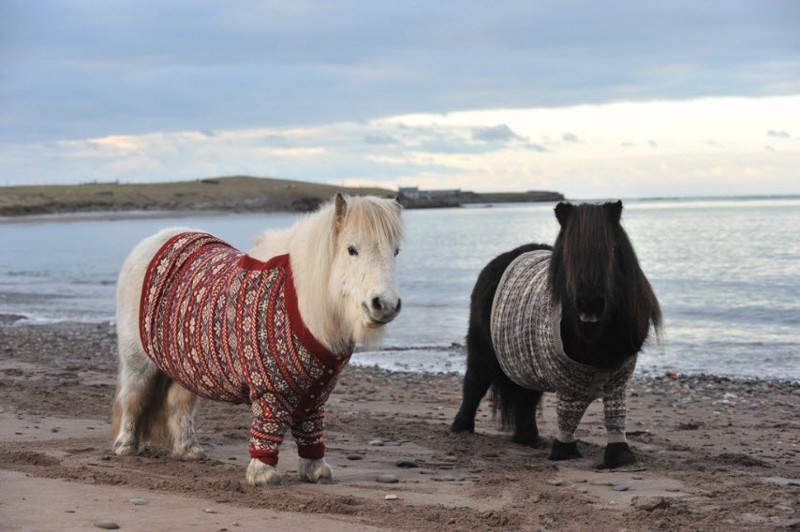
Can you quess how these creatures can be named? HOBYN

Hobyn is "small, active horse", probably originally a proper name for a horse. Hobyn can be used as a name, action, and talent. Short for hobyn is hobbi. This word is the origin for hobby. (More information click here.)

Please comment

1.How do you usually spend your days off?
2.Whom do you like to spend your time for leisure with?
3.What is your hobby?
4.What theatres are there in your town?
5.You are not a cinema goer, are you?
6.What types of films do you like?

четверг, 4 сентября 2025 г.

The English language


English is a world language. English is spoken by more than 350 million people. Geographically, it is the most widespread language on earth, second only to Chinese in the number of people who speak it.
It is the language of progressive science, technology and cultural relations. Without a doubt, English is the most advantageous and accepted language for world-wide business. It is also the major language of diplomacy.
Learning a foreign language is not an easy thing. Learning English is like learning to swim or to play ball. We learn to swim by swimming, to play ball by playing ball and to speak English by speaking English. Nobody can learn to swim or play ball for you. Nobody can learn English for you. It is long and slow process that takes a lot of time and patience.
But to know English today is absolutely necessary for every good specialist, for your career in particular, as the specialist who can speak in the appropriate tongue will gain the advantage today. And you will learn it if you really want to.
Language is not to be taught, language is to be learnt.

Watch The world's English mania by Jay Walker


Can you comment now these questions:
1. What did Jay Walker say was the world's newest mania?
2. How many people are trying to learn English around the world?

Can you complete now these statsments:
1. "If you are a Chinese student, you start learning English in the 3rd grade. That's why China will become the world's ________."
2. Jay Walker says that music is the language of ________.

суббота, 28 июня 2025 г.

How does money laundering work?

Money laundering is the term for any process that “cleans” illegally obtained funds of their “dirty” criminal origins, allowing them to be used within the legal economy. And the practice is about as old as money itself. But how does it actually work? Delena D. Spann describes the ins and outs of money laundering.
Comment on:
What act, pertaining to money laundering, was significant in the year 1986?
With the rise of virtual currency what is another method used to launder money?
With the advancement of technology, is it easier to detect money laundering? Please explain.

понедельник, 16 июня 2025 г.

понедельник, 2 июня 2025 г.

Monkey Steals Money

Last month, an unusual thief visited a jewellery shop. The thief was a monkey.
First, an employee of the shop noticed the monkey sitting outside the shop door and he offered a piece of fruit to the monkey. Shortly after that, the unsatisfied monkey pushed open the door and went inside the shop. He took a seat in an office chair, relaxed, then took some money and ran off with it.
The employee tried to offer the monkey a banana in exchange for the money, but the thief did not want it and escaped into the street with about 10,000 rupees, which is about 150 US dollars.
Shop staff said that they saw this monkey before. They will be more careful now if he comes back again.
Difficult words: jewellery (small decoration on your body), escaped (ran away and nobody caught him), staff (people that work somewhere).
You can watch the original video www.newsinlevels.com

Can asecurity camera, in your opinion, be a good eqipment for prevention of robbery? Please comment below.

суббота, 31 мая 2025 г.

How inventions change history (for better and for worse)

Invented in 1793, the cotton gin changed history for good and bad. By allowing one field hand to do the work of 10, it powered a new industry that brought wealth and power to the American South -- but, tragically, it also multiplied and prolonged the use of slave labor. Kenneth C. Davis lauds innovation, while warning us of unintended consequences.


Comment on:

What was the “peculiar institution"?


According to Davis, a person could clean how much cotton by hand in a day?

Is there anything that has made your life easier, but you feel uncomfortable about it? An SUV instead of a hybrid? Disposable plastic as opposed to a reusable container? Describe this innovation and explain how you justify the personal dilemma.

понедельник, 5 мая 2025 г.

grammar. modal verbs


. Read the following sentences and translate them into Russian. Analyze the usage of the modal verbs.
1)                    You shall go there. 2) You should help them. 3) I had to work hard last month as I was to take my examinations. 4) He was to come home at 5 but he didn’t come. 5) You ought to help them. 6) The students should not forget that it is impossible to acquire profound knowledge of any subject without great attention. 7) I am to meet my friends at the station. 8) You should read English texts every day. 9) He was to bring the necessary material I asked for. 10) You ought to write these exercises at once.

2. Extend the statements according to the pattern. Use the verb ought to and words suggested in your sentences.

Mrs. Brown is not well. (see a doctor)
She ought to see a doctor.

1.                     John is so untidy. (be neater)
2.                     Mary is so selfish. (help her relatives)
3.                     Mr. Brown isn’t punctual. (come in time)
4.                     Your friend is very rude. (be more polite)
5.                     Jane is so extravagant. (spend less on clothes)
6.                     Grandfather is so forgetful. (write down telephone messages)
7.                     The boys are idle too often. (study more)
8.                     Your husband works too much. (have a rest)

3. Extend the statements according to the pattern. Use the suggested words.

Don’t drink this medicine now. (in an hour)
You should drink it in an hour.

1.                     Don’t drive us to the station now. (in the afternoon)
2.                     Don’t clean your shoes now. (when you come back)
3.                     Don’t take off your coat now. (when it gets warmer)
4.                     Don’t cross the road now. (when there is no traffic)
5.                     Don’t speak to him now. (when he is not so busy)
6.                     Don’t write in pencil. (in ink)
7.                     Don’t copy the text here. (at home)
8.                     Don’t wake him up now. (in half an hour)

4. Answer the following questions according to the pattern. Use the suggested words.

Do we have to read this lesson for today?
(no/for tomorrow)
- No, we have to read it for tomorrow.

1.                     Do you have to go shopping in the afternoon? (no/right now)
2.                     Do they have to work in the laboratory now? (no/from one till two)
3.                     Do you have to take this medicine once a day? (no/three times a day)
4.                     Does she have to meet her little sister after school? (no/after the theatre)
5.                     Does Peter have to ring you up in the morning? (no/in the evening)
6.                     Do they have to write a dictation tomorrow? (no/today)
7.                     Do we have to come here at seven? (no/at eight)
8.                     Do they have to start the experiment now? (no/tomorrow morning)

5. Test-exercise.
1. The weather … change tomorrow.
a)                    may
b)                    must
c)                    should
2. She … to finish  school in a year.
a)                    may
b)                    has
c)                    is
3. I … to cover the whole  distance on foot.
a)                    can
b)                    have
c)                    must
4. … you help me?
a)                    could
b)                    should
c)                    must
5. I’m afraid the weather … change for the worse.
a)                    must
b)                    may
c)                    should
6. Somebody will … to meet her.
a)                    ought to
b)                    need
c)                    have to
7. The sky is dark. It … rain soon.
a)                    may
b)                    should
c)                    has to
8. The lights are on. They … be at home.
a)                    may
b)                    must
c)                    are to
9. You … to come here again.
a)                    must
b)                    should
c)                    have
6. Translate from Russian into English:
1. Вы должны прийти после занятий в лингафонный кабинет и поработать с этим текстом. 2. Простите, можно войти? 3. Вы не должны опаздывать. 4. Вам следует быть более внимательным. 5. Вы можете мне помочь? 6. Я не могу перевести это слово. 7. Вы должны принести словари к следующему уроку. 8. Вам не надо брать книгу. 9. Простите, здесь можно курить? 10. Здесь нельзя разговаривать громко. 11. Вы должны это сделать к вечеру. 12. Шерлок Холмс мог найти преступника, когда полиция Скотланд Ярда не в состоянии была это сделать.

среда, 30 апреля 2025 г.

Test paper

Заполните пропуски при помощи модальных глаголов (can,must,may)

1. I .... drive now but next year I ....... drive .
2. I  have never .....remember his name .
3. .....skate when you were six?
4.He says I .... tell him the truth.
5. He ... to drive last year .
6. I ..... look for another job next month .
7. The bell had gone and I .....answer the questions.
8. You  ... shout at children.
9. You ... leave you luggage here.
10. You ... have bought flowers yesterday .
11. You ... ( not) take dogs to the restaurant.
12. .... I use the telephone?

пятница, 28 марта 2025 г.

Группа Continuous (exersices)

1. Look at the examples and say which of the rules they illustrate.

 1. Lucy is coming to see us on Sunday morning. 2. Tom was only 20 when the Second World War began. He was living with his mother at that time. 3. He is always borrowing money! 4. (In a restaurant) - What would you like to drink, sir? - Nothing, thank you. I'm driving. 5. At this time tomorrow I will be lying on the beach. 6. As I was walking down the road I saw Irene. 7. I can't take the phone: I am washing up. 8. While I was reading John was playing the guitar. 9. It was raining all night. 

2.Choose the correct tense: present simple or present continuous. 

1. Do you know that water (freezes/is freezing) at -4 °C. 2. Sue (looks/is looking) very smart today: she (wears/is wearing) her new black evening dress. 3. Robert (plays/is playing) football best of all in the team. 4. I (don't eat/am not eating) honey: it always (makes/is making) me sick. 5. What beautiful swans! Look! One (swims/is swimming) towards us. 6. - What (do you look/are you looking) at? - This book. It hasn't been here before. 7. - Can you explain the rule again? I (don't understand/am not understanding) it, I am afraid. 8. My father usually (has/is having) coffee in the morning, but today he (has/is having) tea. 9. Where (do you go/are you going)? May I go with you? 10. Fewer and fewer people (smoke/are smoking) tobacco nowadays.

 3. Match the questions and answers.

 1) What languages does he speak?

 2) Is he speaking German to us?

 3) Do you buy any periodicals?

 4) Why are you buying this funny hat? 

5) Do you go to the opera at all? 

6) Are you going with us? 

7) (At) what time do you usually get your mail?

 a) I like it. I think I can wear it at the Halloween party.

 b) Between seven and eight in the morning.

 c) Yes, dear. It is getting dark.

 d) Yes, he does. He is a great detective.

 e) I'd like to. f) Just one - his native. 

g) Sherlock Holmes is. He is a great detective.

 h) Yes, I do, but not many.

 i) I don't think so. I think he is speaking Spanish.

 j) I do, but not very often.

8) Are we going home already?

 9) Who is solving the mystery of the lost notebook? 

10) Does Holmes solve all the mysteries easily?


4 Put the verbs in the correct tenses. 

1. - What you (do) at about 9 o'clock tonight? - I don't know yet. Probably I (watch) television.

 2. - What you (think) about? - My brother. I often (think) about him these days.

 3. When I (be) younger, I (prefer) bananas to all fruits, but now I (eat) only citrous fruits. 

4. Yesterday evening, when my sister and I (do) our homework, the telephone (ring). I (answer) it and (hear) a strange voice.

 5. - Could you give me a lift? - Not today, I (not drive) I (go) by bus. Sorry.

 6. Tomorrow after classes John (work) in the library. He usually (go) to the library after classes. He (prepare) for his exams. 

7. - You (fly) to the sea or (go) by train? - I (fly); my flight is tomorrow morning.

 8 - Whom you (talk) to when I (meet) you in the shop? - To my friend. We (do) shopping together.

 9. - How can I get to the station? - I (take) you in my car. I (go) to the sta- 31 tion myself. 

10. Usually Mary (not make) mistakes in her spelling, but yesterday she (do) the spelling test rather badly. I hope she (learn) the new words now.

 11. They (walk) in silence for a long time and then Ben (turn) to Johnny and (smile), "Why you never (tell) me about your family?" he (ask).

 12. If someone (call), tell them I (be) free after seven. 


понедельник, 3 марта 2025 г.


Упражнения "Пассивный (страдательный) залог"


1. Употребите правильную форму глагола в пассивном залоге.

  1. The roads (cover) with the snow. – Дороги покрыты снегом.
  2. Chocolate (make) from cocoa. – Шоколад изготавливается из какао.
  3. The Pyramids (build) in Egypt. – Пирамиды были построены в Египте.
  4. This coat (buy) four years ago. – Это пальто было куплено 4 года назад.
  5. The stadium (open) next month. – Стадион будет открыт в следующем месяце.
  6. Your parents (invite) to a meeting. – Твои родители будут приглашены на собрание.
  7. Where is your car? – It (mend) at the moment.  – Где твоя машина? – В данный момент она ремонтируется.
  8. The books already (pack). – Книги уже упакованы.
  9. The castle can (see) from a long distance. – Замок можно увидеть издалека.
  10. The guests must (meet) at noon. - Гости должны быть встречены в полдень.


2. Измените предложения по образцу:


Н-р:   Shakespeare wrote “Romeo and Juliet”. (Шекспир написал «Ромео и Джульетту».) – “Romeo and Juliet” was written by Shakespeare. («Ромео и Джульетта» была написана Шекспиром.)

  1. Popov invented radio in Russia. (Попов изобрел радио в России.)
  2. Every four years people elect a new president in the USA. ( Каждые 4 года народ выбирает нового президента в США.)
  3. The police caught a bank robber last night. (Полиция поймала грабителя банка прошлой ночью.)
  4. Sorry, we don’t allow dogs in our safari park. (Извините, но мы не допускаем собак в наш сафари парк.)
  5. The postman will leave my letter by the door. (Почтальон оставит мое письмо у двери.)
  6. My mum has made a delicious cherry pie for dinner. (Мама приготовила вкусный вишневый пирог на ужин.)
  7. George didn’t repair my clock. (Джордж не отремонтировал мои часы.)
  8. Wait a little, my neighbor is telling an interesting story. (Подожди немного, мой сосед рассказывает интересную историю.)
  9. My son can write some more articles about football. (Мой сын может написать еще немного статей о футболе.)
  10. You must clean your bedroom tonight. (Ты должен убраться в своей спальне сегодня вечером.)


3. Превратите предложения в отрицательные и переведите.

  1. Ann was bitten by a homeless dog.
  2. The zoo is being reconstructed at the moment.
  3. The luggage must be checked at the customs.
  4. Souvenirs are sold everywhere.
  5. The job will be finished at 3 o’clock.


4. Дайте полные ответы на следующие вопросы.

  1. Are the Olympic Games held every 10 years? (Олимпийские игры проводятся каждые 10 лет?)
  2. Is bread made from flour or potatoes? (Хлеб готовят из муки или картофеля?)
  3. Was the Eifel Tower built in Moscow? (Эйфелева башня была построена в Москве?)
  4. Will the final exams be taken in summer or in winter? (Выпускные экзамены будут сдаваться летом или зимой?)
  5. When is Christmas celebrated in Europe? (Когда празднуется Рождество в Европе?)